Yatzy - Classic Dice Game
- 4.9
- Rating
- 100.00K
- Installs
- Free
- Price

 Analysis by App-foxy
I found Yatzy - Classic Dice Game easy to understand within a few minutes, which is exactly what I want from a casual board game. TerranDroid keeps the idea familiar: roll dice, decide which results are worth keeping, and try to build the strongest score across the available combinations. It is free to start, suitable for Everyone, and works on Android devices running version 5.0 or later. That makes it a practical choice for a quick break, a relaxed evening, or a simple game to share with someone who does not want to learn a complicated rule set.
What makes this version appealing is not novelty but accessibility. I can pick it up without studying a long tutorial, and the basic objective becomes clear through play. At the same time, the dice are not completely mindless. The interesting decisions come from accepting a safe score, chasing a better combination, or protecting a future turn by avoiding an overly ambitious roll. The first useful habit is to think about the score sheet before throwing again, rather than treating every roll as a reason to gamble.
What to expect from this digital Yatzy board game
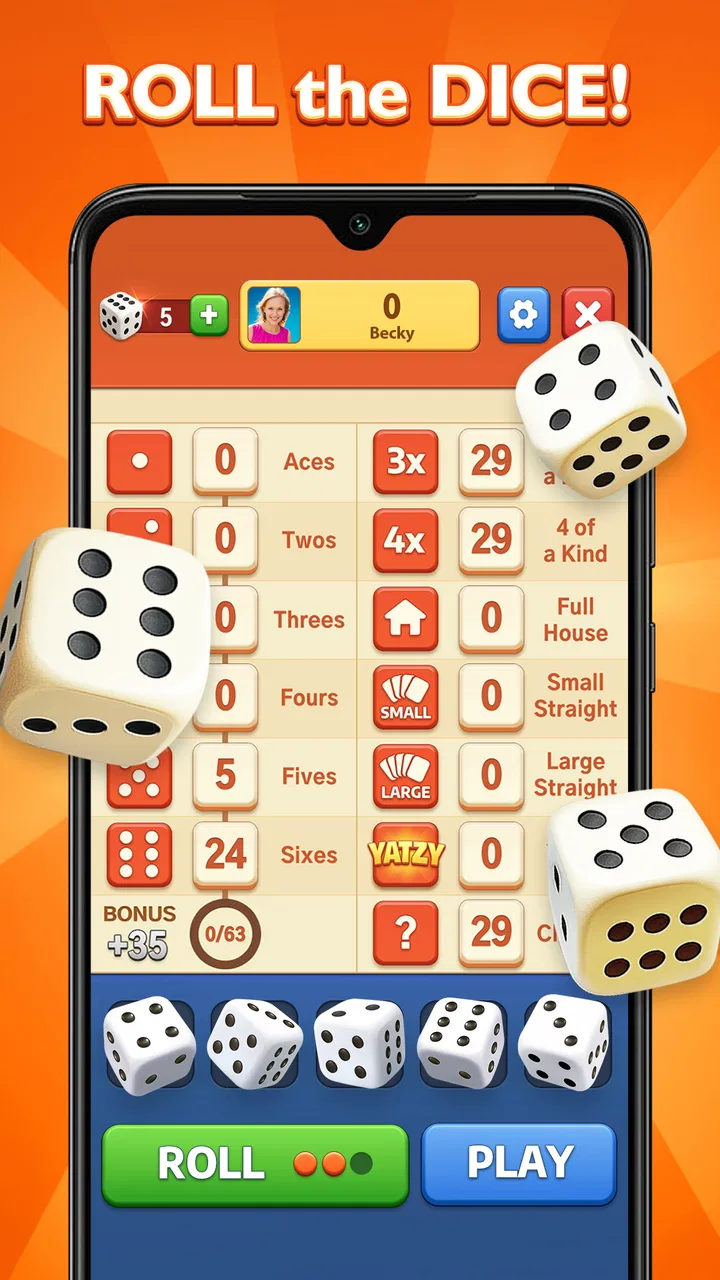
This is a board-style dice game built around short turns and repeated choices. A turn is not simply about luck. After seeing the dice, I have to judge which results are valuable, which ones can be improved, and which scoring category is worth using. That small decision loop gives the game more depth than its simple appearance suggests.
You May Also Like

 Blood Strike: 2.5 Anniversary
Blood Strike’s Loadouts Turn Every Drop Into a Tactical Gamble
A close look at Blood Strike’s custom loadouts: how fast access to signature weapons reshapes its battle royale rhythm, rewards preparation, and narrows the gap between fights.

 Pandora - Music & Podcasts
Pandora’s Music Is Easy to Start, but Harder to Recover
Pandora’s strength is its low-effort path from a seed to a station. Its weak spot is how much confidence it asks you to place in connection, setup, and quiet recovery.

 8 Ball Pool
 Is Built on Rivalries, Rematches, and Routine
A close look at the rivalries, rematches, shared routines, and unanswered safety questions that turn a quick pool match into a persistent mobile community.

 Samsung Music
’s Quiet Strength Is Playing What You Already Own
Its reach comes less from spectacle than from dependable access to a personal library. That simplicity is both the app’s strongest retention engine and its ceiling.

 AccuWeather: Weather Radar
AccuWeather Review: A Quick, Clear Forecast for Everyday Decisions
For everyday plans, the best forecast is the one you can understand quickly. AccuWeather makes rain timing, radar, and local conditions easy to act on, with a few trade-offs.

 Hill Climb Racing
Why Hill Climb Racing Still Turns Crashes Into One More Run
A tiny car, a bumpy hill and one more upgrade: Hill Climb Racing keeps resurfacing because its simple chaos makes every near-miss feel personal.
More From Our News Desk
View All News


The presentation is aimed at people who already know the general idea of Yatzy, as well as newcomers who want a straightforward introduction. The store description calls it a classic dice game, and that is a fair way to frame it, but I would not approach it expecting a large adventure, a story campaign, or a collection of unrelated modes. Its appeal is the compact rhythm of rolling and scoring.
TerranDroid has positioned it as a free game, with optional in-app purchases listed from $1.99 to $49.99 per item. I would keep that in mind before handing the phone to a child or allowing purchases on a shared device. The Everyone rating makes it broadly approachable, but an age rating does not remove the need for sensible purchase controls, particularly when a game is designed for repeated short sessions.
The reception is notably strong, with an average rating of 4.9 from around 5.3 thousand ratings and more than 100 thousand installs. Those figures suggest that the simple format is connecting with players, although I would still judge it by your preferred style of play. A high rating cannot turn a luck-based dice game into a strategy title, and people who need deep progression may find the core loop too narrow.
Why the small decisions matter
On a first look, rolling dice can seem almost entirely random. In practice, the important moment arrives after the roll. If I already have a useful pair and several numbers that could support a sequence, I need to decide whether to preserve the pair or pursue the sequence. That choice is where the game becomes personal rather than automatic.
A useful approach is to separate “good-looking” dice from “useful” dice. A high number may appear attractive, but it is not always the best piece to keep if the remaining dice could complete a stronger pattern. Conversely, chasing a perfect result can leave a score sheet with an awkward empty category. I learned to value a reliable result when the alternative was likely to create a difficult future turn.
This makes the game suitable for a few different moods. I can play casually and accept imperfect outcomes, or I can use each turn as a small probability puzzle. Neither approach is wrong. The first is better when I have only a few minutes, while the second gives the game enough mental texture for a longer session.
Getting through the first setup without overthinking it
For a first-time player, the best way to begin is to install the game, open it, and start with the default play flow instead of searching for advanced tactics immediately. The current version is 1.3.3, and the minimum operating system requirement is Android 5.0. On a compatible phone, the initial goal should be simple: understand how a roll becomes a choice and how that choice becomes a recorded score.
I recommend playing the opening turn slowly. Look at every die, identify the combination that seems closest to completion, and then decide what to keep. Do not worry about producing an impressive result on the first attempt. The first meaningful success is not necessarily a huge score; it is completing a category deliberately and understanding why that category was selected.
That distinction matters because newcomers often treat the score sheet as a list of boxes to fill at random. I found it more helpful to view it as a limited set of future opportunities. If a turn produces an excellent combination, it may be worth assigning it to a category that is difficult to reproduce. If the roll is poor, using a less valuable category can protect stronger options for later.
Another practical tip is to pause mentally before the final roll. The early roll usually tells me what the turn might become, while the last decision tells me whether I am being sensible. If I am one number away from a tempting pattern, I ask whether the possible improvement is worth risking the result already in hand. That question prevents many frustrating turns.
Your first successful action
The easiest way to feel progress is to aim for a modest, intentional score rather than a rare spectacular combination. Keep a pair when it clearly gives you a stable direction. If several dice point toward a sequence, keep the connected values and accept that the result may remain incomplete. If the roll is scattered, stop trying to force a pattern and use the turn to reduce damage.
My first satisfying improvement came from treating the score category as part of the decision from the beginning. Instead of rolling first and choosing afterward, I considered which categories were still available and which one matched the dice. This made the game feel less like a series of isolated throws and more like a plan that unfolded over the whole score sheet.
For a family member or friend trying the game for the first time, I would explain only three ideas: keep dice that support a clear plan, do not chase every attractive possibility, and remember that an average score can be better than wasting a valuable category. That is enough to create a meaningful first round without turning a casual game into a lesson.
One everyday scenario where it fits well is a short waiting period. I can play a turn while waiting for an appointment, put the phone away, and return later when I have another moment. The game’s board-game structure also works during a relaxed conversation, because the decisions are small enough to leave room for talking. It is less suitable when I need uninterrupted concentration or when I am looking for a fast action game with constant movement.
Common confusion for new players
The most common misunderstanding is assuming that the highest visible dice should always be kept. They are only valuable when they serve the scoring plan. A lower number can be more important if it completes a sequence, supports a group, or preserves flexibility. I try to judge the relationship between dice instead of ranking each one separately.
Another source of confusion is the difference between a promising roll and a guaranteed result. A pair may become a stronger group, but it may also remain only a pair. A nearly complete sequence may fail on the next throw. The game becomes more enjoyable when I accept that a good decision can still produce an ordinary outcome. Strategy improves the quality of the choice, not the certainty of the dice.
Some players may also wonder why a weak turn should be recorded at all. The answer is that leaving a category unused can create pressure later, depending on the situation. When the dice are poor, I look for the least damaging place to record them rather than waiting indefinitely for a perfect opportunity. This is one of the first lessons that separates a thoughtful round from random tapping.
It is also easy to confuse a lucky result with a repeatable tactic. If a rare combination appears, enjoy it, but do not assume the same approach will work every time. The better takeaway is to remember what the dice looked like before the successful roll and whether the choice was aggressive or conservative. That helps build judgment without pretending that luck can be controlled.
How to make the next rounds more deliberate
Once the rules feel comfortable, I suggest dividing the score sheet mentally into immediate opportunities and difficult future targets. If the current roll strongly matches a demanding category, I consider taking it now. If it only offers a mediocre result, I ask whether another category would be easier to fill later. This prevents the final turns from becoming a scramble for options that were ignored earlier.
A second useful routine is to decide what kind of player you are in that round. A conservative approach protects reliable scores and is usually less stressful. An aggressive approach chases bigger combinations and can produce a more memorable result, but it also creates more disappointing turns. I prefer switching between the two depending on the state of the score sheet rather than using one style every time.
When playing with another person, the game can become a quiet comparison of decisions rather than a noisy competition. I notice that discussing why someone kept one die and discarded another often teaches more than simply comparing final totals. If you are introducing it to someone else, avoid correcting every choice. Let the consequences of the roll explain the trade-off, then discuss the decision afterward.
Compared with a physical dice set, this mobile version is more convenient because the phone handles the rolling and scoring flow. A tabletop game remains better when several people want to sit around the same surface, handle real dice, and create their own house rules. Compared with more elaborate board-game apps, this one is easier to enter but offers less variety and less sense of progression. Its strength is the clean central loop, not a large amount of content.
Compared with other casual mobile games, it is a good fit for players who prefer thinking in turns rather than reacting quickly. It does not demand the same kind of attention as a fast arcade game, yet it still gives me a reason to reconsider each move. If you want a game that can be played in short bursts without learning a complicated control scheme, that simplicity is a genuine advantage.
Who should choose it, and who should skip it
I would recommend this board game to first-time Yatzy players, fans of traditional dice games, and anyone who likes light decision-making with a strong luck element. It is particularly approachable for people who want an uncomplicated game to share with relatives or friends. The Everyone content rating also makes it a natural candidate for broad household use, provided in-app purchasing is managed appropriately.
I would be more cautious about recommending it to players who need online competition, deep customization, a story, or a long-term progression system. The core pleasure comes from repeating the roll-and-score cycle, so anyone who gets bored with familiar rules may feel that the experience becomes predictable. It is also not the best choice when you want a purely skill-based game, because even excellent decisions cannot remove the uncertainty of the dice.
The free entry point lowers the barrier to trying it, but the optional purchase range is worth remembering. I would play the free experience first and decide whether it already satisfies my needs before spending anything. For a casual dice game, that is the sensible order: establish whether the basic rhythm is enjoyable before treating optional purchases as necessary.
My practical verdict after settling into the rhythm
Yatzy - Classic Dice Game succeeds because it does not make a familiar format harder than it needs to be. TerranDroid’s game gives a newcomer a clear path from the first roll to the first intentional score, while leaving enough room for better judgment over time. I like that the strongest lessons are small and practical: protect useful dice, recognize when to stop chasing, and treat the score sheet as a limited resource.
Its limitations are equally clear. The game’s simplicity will not satisfy everyone, and the luck factor can make a well-considered turn feel unrewarded. Players seeking a broad board-game collection or a more ambitious competitive experience should look elsewhere. For me, though, those boundaries are part of its identity rather than a flaw hidden behind unnecessary features.
The current release arrived on January 14, 2025, and the game remains free to try on supported Android devices. With its 4.9 average rating and a growing audience, it is easy to see why the format appeals to casual players. I would install it when I want a familiar dice game that starts quickly, rewards careful choices, and fits naturally into short gaps in the day.
My recommendation is simple: try it if you want a calm, approachable Yatzy round, but skip it if you need more variety than one focused dice system can provide. Give the first game enough attention to understand the scoring decisions, then decide whether the balance between luck and planning suits you. If it does, this is the kind of small game that can remain useful long after the novelty of the installation has disappeared.
FAQs for Yatzy - Classic Dice Game
01What is Yatzy - Classic Dice Game?
Yatzy - Classic Dice Game is a digital version of the popular dice game where players aim to score the highest points by rolling five dice to achieve specific combinations. It's available on both Android and iOS platforms, offering a mix of strategy and luck in a captivating user interface.
02How do I play Yatzy - Classic Dice Game?
To play Yatzy, roll five dice up to three times per turn to create combinations like three of a kind, straights, or the coveted Yatzy (five of a kind). Each combination has a different point value. The goal is to maximize your score across different categories over several rounds.
03Is Yatzy - Classic Dice Game free to download and play?
Yes, Yatzy - Classic Dice Game is free to download and play on both Android and iOS devices. However, it may offer in-app purchases for additional features or ad-free gameplay. Check the app store listing for specific details on pricing and available purchases.
04Can I play Yatzy - Classic Dice Game offline?
Yes, Yatzy - Classic Dice Game can be played offline, allowing you to enjoy the game without an internet connection. This feature is great for playing on the go or when you're in areas with limited connectivity. However, some features like multiplayer modes may require an internet connection.
05Does Yatzy - Classic Dice Game have multiplayer options?
Yes, Yatzy - Classic Dice Game typically includes multiplayer options. You can challenge friends or random opponents online, adding a competitive edge to the game. Check the app's settings or menu to find and join multiplayer matches, enhancing the social aspect of the game.
Pros
- Intuitive interface for easy navigation.
- Engaging gameplay keeps users entertained.
- Multiple game modes available.
- Offline play option for convenience.
- Regular updates with new features.
Cons
- Occasional in-app ads can be distracting.
- Limited free features without purchase.
- Requires internet for some features.
- Graphics could be more visually appealing.
- No multiplayer chat function.

Yatzy - Classic Dice Game
Gallery